Skip to Content

Every day, 2.2 billion cups of coffee are consumed worldwide. Most people never ask what it took to grow them.

The answer is deeply uncomfortable. Coffee has become one of the most pesticide-intensive crops on earth, more chemical-dependent per hectare than maize or soy, and many of the substances driving that dependency are Highly Hazardous Pesticide.

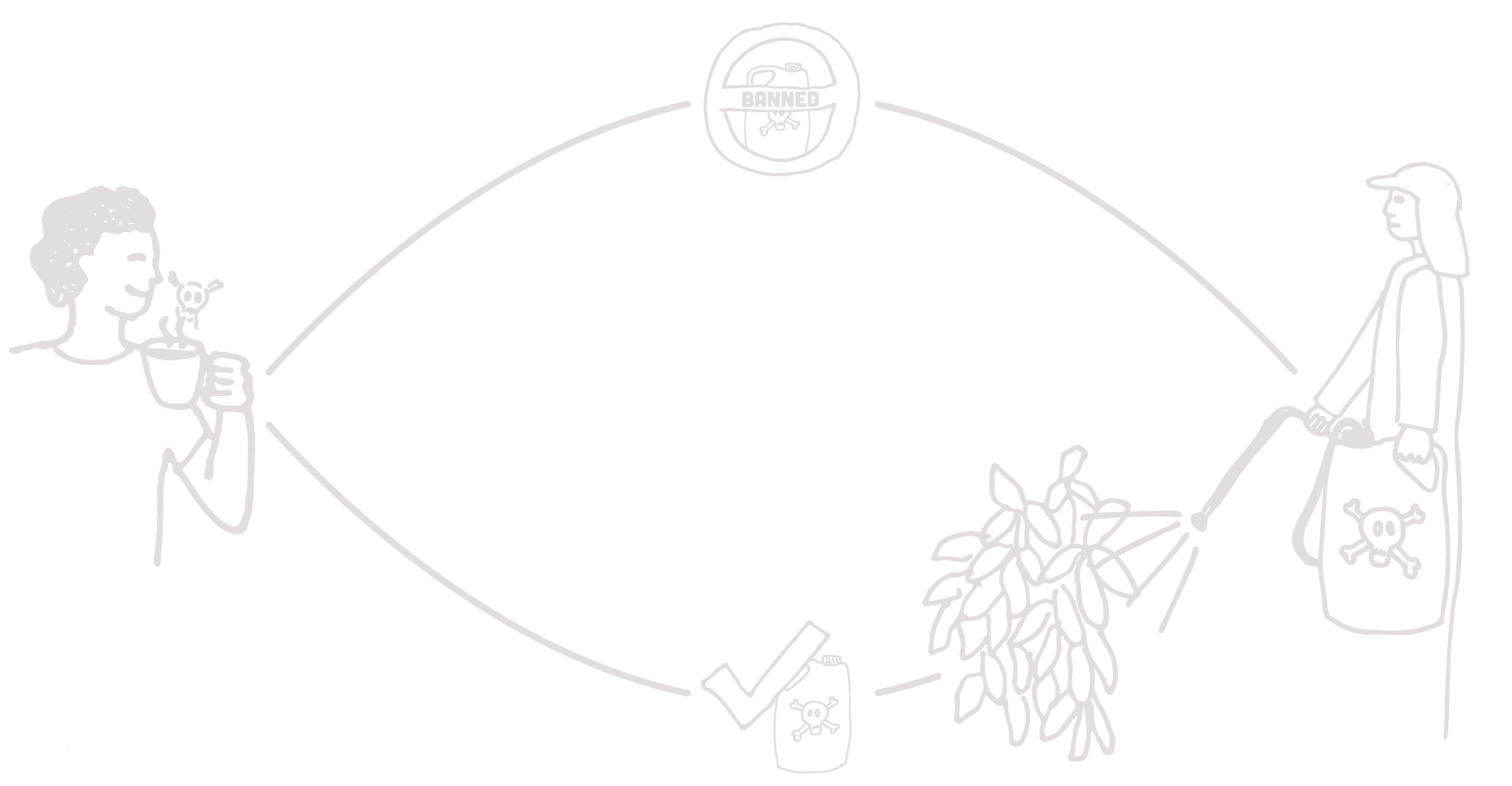
Many are banned outright in the countries where that coffee is sold, as they are too toxic for domestic use, but still exported, sprayed, and re-imported as residues in the cup.

This is the first comprehensive global synthesis of how dependent the coffee sector is on HHPs and what that system is actually doing to farmers, consumers and the ecosystem.

This report brings together evidence from Brazil, Vietnam, Kenya, Colombia, and other major producing regions to expose the scale of pesticide use in coffee, the human and environmental harms it causes, and the regulatory failures that allow this system to persist – while also potentially exposing coffee consumers to a toxic cocktail of pesticide residues in every cup.

But this is not a story without solutions. The report also outlines a path forward — one that centers agroecology, farmer safety, and global accountability.

This report is a roadmap — and a warning. The global coffee industry cannot sustain a system built on exported risk, invisible harm, and regulatory silence. The question is whether it will act before the cost becomes irreversible.

Scale and frequency of pesticide use

Much global data on coffee and pesticides is missing or hidden. Where data exists publicly, it reveals staggering chemical intensity.


Brazil, the world’s largest producer, used 19.8 million liters of pesticides on coffee in 2015 alone, 3.8% of all pesticides sold nationally. Coffee receives more pesticides per hectare than maize or soy, and pesticide sales continue to rise.


Vietnam, the second-largest producer, has seen agricultural pesticide use increase 3- to 5-fold in 25 years, with coffee ranking second only to rice although rice occupies far more land. In Kenya, coffee accounts for 27% of national pesticide use despite occupying far less land than other pesticide dependent staple crops.


Farmworkers in these systems face repeated exposure.

Coffee beans being processed
Climate-damaged forest

Slide to see before and after climate changes

Coffee beans being processed

A Double Standard in Global Trade

The report exposes a stark regulatory hypocrisy: pesticides banned in consuming countries are still exported to coffee-producing countries, where regulation and enforcement is weaker.


A chemical banned for use becomes a residue that is tolerated for coffee imports. This double standard, where substances that are too dangerous for domestic use are sold abroad and re-enter consumer markets as residues, shifts health and environmental risks onto producing countries while playing Russian roulette with consumers’ health.

Human Toxicity: Highly Hazardous and banned pesticides dominate coffee

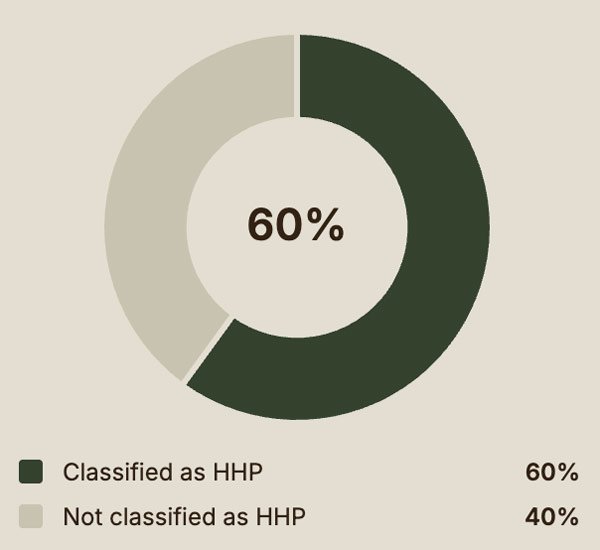
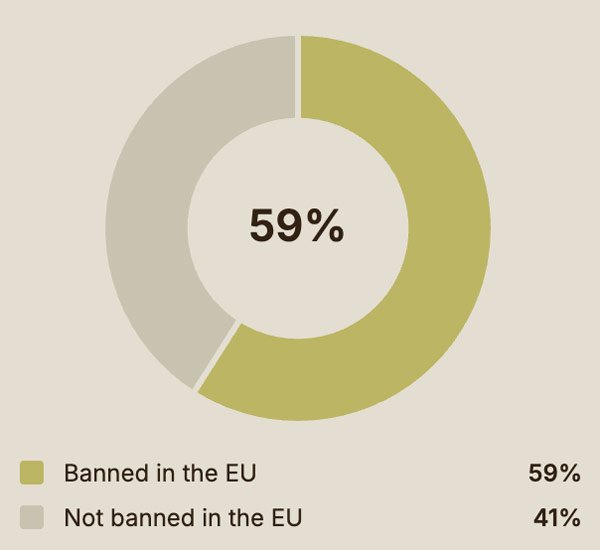
Many of coffee’s commonly used pesticides are hazardous. Across Brazil, Kenya, and Colombia, at least 159 active ingredients are registered or used in coffee production, of which:

Pesticides classified as Highly Hazardous pie chart Pesticides banned in EU pie chart
  • 60–77% are Highly Hazardous Pesticides (HHPs)
  • 59% are banned in the European Union
  • 14 are WHO Class 1A/1B, meaning extremely or highly hazardous
  • 22 are carcinogenic or probably carcinogenic
  • 40 are reproductive toxicants or endocrine disruptors
  • 29 are neurotoxic, with prenatal exposure harming children’s brain development
  • 12 appear on the Rotterdam Convention’s Prior Informed Consent list, meaning they require explicit approval before export — yet they remain widely used on coffee farms
Woman harvesting coffee

These chemicals are linked to cancer, endocrine disruption, miscarriages, infertility, neurotoxicity, Parkinson’s disease, and acute poisoning symptoms such as dizziness, vomiting, blurred vision, and respiratory distress.

Glyphosate: a case study in systemic failure

Glyphosate, classified as “probably carcinogenic to humans” by the WHO’s IARC, remains deeply embedded in coffee production. Despite global litigation around severe alleged harms of glyphosate and billions in damages awarded to exposed workers, glyphosate use has not declined in coffee.


Brazil alone has 164 registered glyphosate products approved for coffee. Kenya ranks glyphosate as the second-most used pesticide in coffee. Glyphosate residues have been detected in green coffee beans across multiple countries. One ray of light stands out: Vietnam’s 2021 ban on glyphosate demonstrates that regulatory action can rapidly reduce residues and shift practices.

“Toxic cocktails” linger in consumers’ cups, with unknown health effects

Glyphosate

Testing of coffee imports is minimal. Yet evidence shows that pesticide residues are present on green coffee beans, including glyphosate and other HHPs. In 2022, EU authorities tested only 44 green coffee samples,and 23% contained pesticides banned in the EU. Regulatory frameworks often tolerate residues of chemicals on imported coffee that would be banned if the coffee was grown at home. The presence of banned pesticides in coffee increased tenfold between 2011 and 2022.

Roasting coffee

While washing and roasting coffee reduces some residues, others persist, and monitoring remains inconsistent and insufficient. Pesticides with low volatility and high thermal stability can and do persist despite washing and roasting, particularly when the molecule binds tightly to the bean matrix. Residue studies from coffee for consumers show:

Poison in your coffee

Every 5th cup we drink is likely tainted by poison residues

  • 19% of green coffee samples contain pesticide residues
  • 72% of roasted coffee in the US showed glyphosate leftovers (AMPA)
  • 21% of roasted coffee samples tested in Egypt contain residues, with chlorpyrifos, imidacloprid, and cypermethrin among the most commonly detected
  • Many samples contain multiple residues simultaneously, forming a “toxic cocktail”
Testing coffee

What little testing there is usually looks at pesticide residues one by one, in isolation. But coffee samples routinely contain multiple pesticide residues at once and current regulatory frameworks have no answer for what those combinations do to human health.


A study found multi-residue contamination in up to 79% of roasted coffee samples, including toxic substances such as mepiquat chloride, permethrin, and methiocarb sulfone.

Beyond consumers, roasters may inhale residues that volatilise at high temperatures.

Farmers and farmworkers are being poisoned

Farmers, farmworkers and rural communities face the highest exposure. Pathways include mixing and spraying chemicals, re-entering fields too soon after application, contaminated water, drift from neighboring farms, and residues on clothing and equipment.


Acute effects include poisoning, respiratory distress, skin burns, and neurological symptoms. Chronic exposure is linked to cancer, reproductive harm, endocrine disruption, neurodevelopmental disorders, and long-term organ damage. Children, pregnant women, and older workers are especially vulnerable.


The “protection gap” such as lack of training, protective equipment, medical care, and regulatory enforcement magnifies these risks.

In the Dominican Republic, 87% of coffee farmers reported not wearing masks or gloves when they spray. In India, 2/3 of coffee workers used no protective measures at all during pesticide application. Investigative reporting from Brazil found workers on large commercial plantations spraying wearing only their own clothes, without the protection the law requires.


The industry has spectacularly failed in almost every country to monitor worker health, and the true burden of occupational illness for farmers and farmworkers remains invisible. But what evidence we have gathered indicates a lethal story.

Brazil’s coffee heartland tells the story with uncomfortable clarity: In 2012, official records from Minas Gerais, which produces roughly half of Brazil’s coffee, recorded 21 pesticide deaths and 817 agricultural poisonings. Those numbers represent a fraction of reality. A Danwatch survey of 412 coffee workers in the same area found that 59% reported at least one acute poisoning symptom, more than 200 people in a single study area, far exceeding the official statewide total.


Broader research estimates that up to 88% of farmworker pesticide illnesses go undocumented. The pattern documented in Brazil repeats across every major coffee-producing region. Research in Tanzania, Kenya, the Dominican Republic, Vietnam, Nicaragua and Costa Rica consistently finds high rates of acute poisoning symptoms among coffee workers.

Coffee farmers face particularly high exposure due to frequent applications. A single growing season can involve up to repeated fungicide, insecticide, and herbicide applications, primarily glyphosate and paraquat.


Workers handle these substances repeatedly — mixing, spraying, and returning to treated fields, often without precautions, for years, and even across entire careers. The health consequences that emerge from this level of exposure are serious and wide-ranging: neurological disorders, reproductive harm, cancer, respiratory disease, organ damage, and mental health conditions.


Research suggests that drinking coffee may reduce the risk of Parkinson's disease for consumers — but some of the pesticides used to produce it can cause the very condition that coffee appears to help prevent, for farmworkers.

Environmental Damage: Water, Soil, Biodiversity

Coffee is contributing to our mass extinction crisis. Pesticides used in coffee contaminate water sources, degrade soil health, and drive biodiversity loss. Runoff pollutes rivers and groundwater. Soil microbial communities are disrupted, reducing fertility and resilience.


Pollinators and beneficial insects that are critical for ecosystem balance, are decimated by toxic exposures. The cumulative ecological damage undermines long-term agricultural sustainability and threatens the very ecosystems coffee depends on.

This report documents how pesticides commonly used in coffee production are highly toxic to ecosystems:

  • 46 active ingredients are very toxic to bees, threatening pollination
  • 48 are very toxic to fish, contaminating rivers and watersheds
  • 18 are toxic to beneficial insects essential for natural pest control
  • 11 are toxic to earthworms, undermining soil health

Water contamination is widespread, soils degrade under chemical pressure, and biodiversity collapses in monoculture landscapes.

In Brazil's Mantiqueira Range, researchers identified a 44.7% probability of surface water contamination from common coffee pesticides, with 24 different substances regularly detected in waterways near plantations. In Colombia, pesticide residues were detected in 81.3% of surface water samples taken from coffee-growing regions, including already-prohibited substances such as DDT and endosulfan alongside currently used pesticides like chlorpyrifos.


Pesticides also reach water systems through a route that receives far less attention: the washing of sprayers and tanks, and the discharge from coffee processing facilities themselves. Pulping, fermentation, and washing operations all generate effluent that can carry significant pesticide concentrations into surrounding waterways. Even after treatment, coffee wastewater retains pesticide residues at concentrations sufficient to threaten aquatic life.

Many pesticides are very toxic to species whose existence is vital to the healthy soils that coffee needs to grow, such as earthworms and pollinators. Their deaths not only contribute to our mass extinction crisis, but also to yields dropping and to financial loss. Studies show that excluding both birds and bees from coffee plants reduced yields by an average of 24.7%, equivalent to a loss of over US$1,000 per hectare. Of the pesticides currently used in coffee production, 64% are either very toxic or moderately toxic to bees. Ironically, the coffee industry is losing money by poisoning the species that it needs to thrive.


Coffee pulp, which farmers have long composted to restore soil fertility, is now so laden with pesticide residues that it risks becoming a vector of contamination rather than renewal.


Widespread use of chemical fertilizers compounds the problem: impacting soil health and biodiversity. Additionally they emit nitrous oxide (N₂O), 273 times more potent than CO₂, significantly increasing coffee’s climate footprint.

Coffee plant evolving into agroforestry and biodiversity

A Path Forward: Real Solutions Exist, but require systemic change

The report emphasizes that the crisis is solvable, but only through genuine system transformation.

Real change means preventing pest pressure from arising in the first place: through agroforestry, biocontrol, and diversified farming systems that work with nature rather than against it. Agroecological coffee farming can dramatically reduce pesticide use while improving yield, resilience, soil health, and biodiversity.

Agroecology offers a framework — one that is ecological, social, and political. It centres farmer knowledge, community resilience, and justice alongside biodiversity and soil health. A truly agroecological coffee system doesn't just produce cleaner beans; it rebuilds ecosystems and creates conditions for farming communities to thrive without being poisoned.

Yellow bird on coffee plant

Conclusion: A call to action

The evidence is clear: coffee’s pesticide problem is systemic, global, and urgent. It harms farmers, ecosystems, and consumers, and it is exacerbated by climate change and regulatory double standards. The stakes are high: the health of millions of farmers, the integrity of ecosystems across the tropics, and the safety of a beverage consumed by billions.


The world cannot afford to ignore the poison in its coffee. But solutions exist. Every cup of coffee can be part of the solution. The question is whether the industry, regulators, and consumers are ready to demand one.

Back to top